
The smell of dry dust, the creak of leather, the distant clanging of a blacksmith’s hammer, and the tense silence of a high-noon standoff—the American frontier remains one of the most captivating settings in human storytelling. Whether you are writing an alternate-history novel, designing a tabletop RPG campaign, or developing an indie video game, your setting needs more than just tumbleweeds and batwing doors. It needs a name that carries weight.
However, finding the perfect moniker for your dusty settlement is deceptively difficult. Many creators fall into the trap of using cliché, uninspired names that break immersion.
That is where a wild west town name generator becomes your ultimate creative sidekick. In this comprehensive guide, we will explore the common pitfalls of frontier worldbuilding, examine the historical logic behind 19th-century naming conventions, and show you how to use modern generator tools to craft unforgettable, atmospheric settings in 2026.
The Problem: Why Naming a Frontier Town is Harder Than Taming the West
If you have ever sat down to write a Western story or draft a campaign map, you have likely run into a frustrating wall of creative block. You want a name that sounds rugged and historic, but every idea that comes to mind feels cheesy, overused, or historically inaccurate.
The Creative Pain Point
When creators need a quick name for a settlement, they often default to overly literal options like "Gold City," "Cowboy Town," or "Desert Springs." These names lack soul. They feel like plastic props in a theme park rather than real, lived-in places where people fought, mined, drank, and died.
A weak town name immediately pulls your readers or players out of the experience. It fails to convey the danger, hope, or sheer grit of the era.
The Root Cause: Over-Poetizing the Frontier
The root cause of this problem is a misunderstanding of how historical names actually developed. Modern creators often try to make names sound poetic, cinematic, or deliberately cool.
But historical frontier settlers were not poets; they were practical, exhausted, and focused on survival. They named places based on immediate physical needs, local geology, family names, or specific (often violent) events.
Without a systematic way to replicate this rugged, utilitarian logic, your fictional towns will always sound slightly artificial.
The Solution: Leveraging a Wild West Town Name Generator
To bypass creative fatigue and avoid immersion-breaking clichés, writers and worldbuilders in 2026 are turning to advanced wild west town name generators. These digital tools study the linguistic patterns, historical records, and geographical logic of the 19th-century American West to generate authentic, atmospheric names instantly.
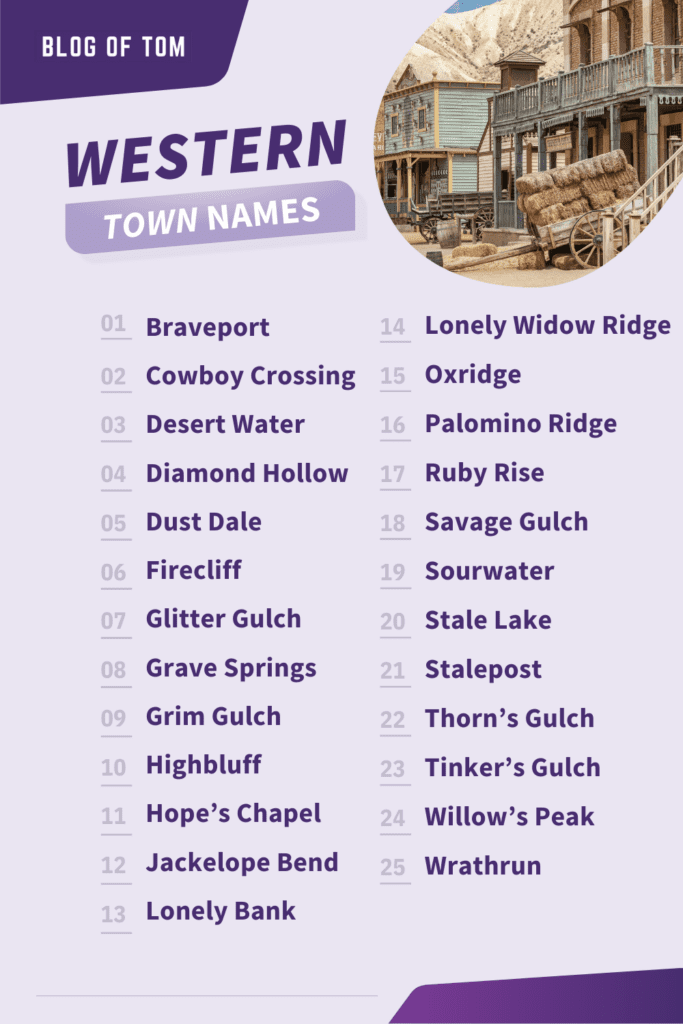
A high-quality generator doesn't just mash random words together. Instead, it utilizes historical naming algorithms to combine geographic markers, natural resources, pioneer surnames, and evocative verbs. This ensures that every generated name sounds like it was pulled directly from a weathered 1880s railroad map.
By using a western town name generator, you can:
- Save hours of tedious brainstorming and keep your creative momentum flowing.
- Ensure historical authenticity by utilizing real 19th-century linguistic structures.
- Establish immediate tone and mood, signaling to your audience whether a town is a lawless mining camp or a prosperous railroad hub.
- Avoid repetitive naming patterns across large fantasy or historical maps.
Historical Blueprint: How Real Old West Towns Got Their Names
To truly master the art of frontier worldbuilding, you must understand the historical blueprint. Real Wild West towns were never just dots on a map. They began as watering holes, military outposts, silver strikes, or railroad sidings, and their names reflected those humble origins.
Historically, old west town names generally fell into one of five distinct categories:
1. Geographic Markers and Natural Features
Settlers named places after what they could see. If a location had a unique rock formation, a reliable water source, or a specific type of vegetation, that feature became its identity.
- Cactus Creek: A desert oasis where water was scarce but vital.
- Red Rock Canyon: Named for the towering sandstone cliffs surrounding the valley.
- Sunset Bluff: High ground offering a clear view of the western horizon.
2. Resources and Industry (Boomtowns)
When gold, silver, copper, or coal was discovered, thousands of prospectors rushed to the site, creating instant "boomtowns." The names of these settlements bragged about their wealth—or lamented their lack of it.
- Silver Creek: A direct nod to the precious metals found in the local waterways.
- Fool’s Gold Gulch: A name steeped in irony, warning latecomers of a depleted or deceptive strike.
- Ironclad Junction: Hinting at heavy industry, machinery, and railway expansion.
3. Surnames and Founders
Many towns were simply named after the first family to build a cabin, the surveyor who mapped the area, or a prominent local figure.
- Dodge City: Named after businessman and military figure Richard Henry Dodge.
- Tombstone: Founded by Ed Schieffelin, who was told he would only find his "tombstone" in the Arizona hills.
- Maverick Mesa: Named after a fiercely independent rancher who refused to brand his cattle.
4. Commemorative and Event-Based Names
Sometimes, a single dramatic, violent, or lucky event was enough to permanently stamp a name onto a location.
- Deadwood: Named for the abundance of dead trees in the surrounding gulch, signaling a rugged, isolated valley.
- Rattlesnake Ridge: Named after a dangerous encounter during the initial surveying of the hills.
- Comanche Crossing: Marking a historical point of interaction, trade, or conflict with Native American tribes.
How to Use a Generator Step-by-Step for Maximum Authenticity
Using a wild west town name generator is incredibly simple, but getting the perfect result requires a bit of strategic thinking. Follow this step-by-step method to turn raw generator output into a living, breathing fictional settlement.
Step 1: Define the Town's Core Vibe and Economy
Before you click "Generate," ask yourself: What is this town's purpose?
- Is it a lawless, violent mining camp clinging to the side of a mountain?
- Is it a quiet, dusty farming community trying to establish law and order?
- Is it a bustling railroad junction where wealthy land barons pull the strings?
Establishing the town's primary economy will help you filter out names that don't fit the narrative.
Step 2: Input Specific Keywords
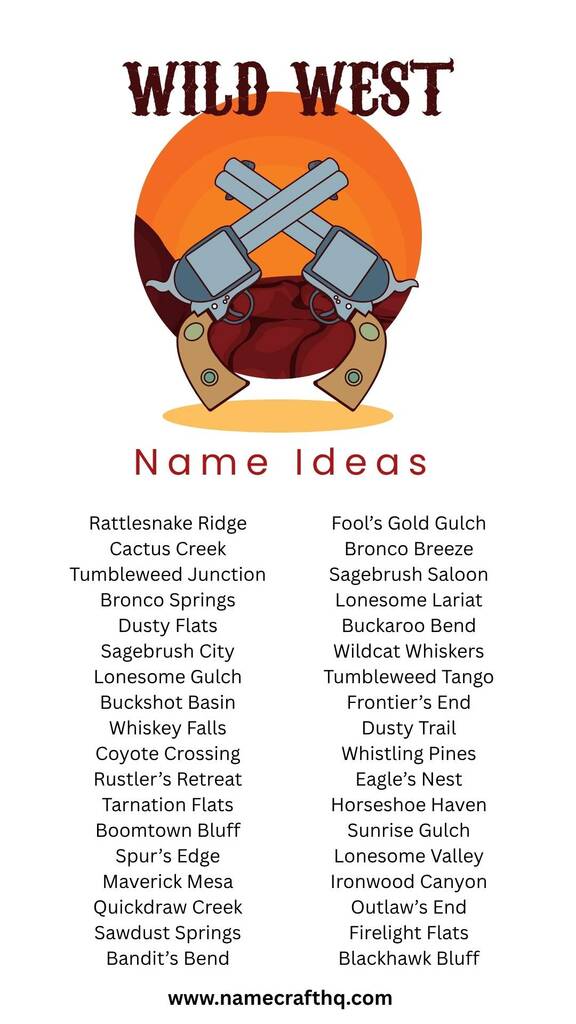
Modern AI-powered generators in 2026 allow you to input specific descriptive keywords. If your town is built near a deep canyon, use keywords like "gorge," "depths," "canyon," or "shadow." If it is a dangerous outlaw haven, try keywords like "rust," "bone," "vulture," or "bullet."
Step 3: Analyze the Output and Customize
Never feel restricted to the exact name the generator provides. Use the generated list as a launchpad. You can easily mix and match prefixes and suffixes to create something entirely unique.
For example, if the generator suggests "Grizzly Springs" and "Tombstone Hollow," you might combine them to create "Grizzly Hollow" or "Tombstone Springs."
Linguistic Formulas of the Wild West
If you want to build your own names manually or better understand how generators function, you can use these classic linguistic formulas. Most authentic Old West names are constructed using a simple two-part formula: [Descriptor] + [Geographic/Industrial Feature].
| Prefix (Descriptor) | Suffix (Feature) | Resulting Town Name |
|---|---|---|
| Blacksmith's | Forge | Blacksmith's Forge |
| Coyote | Springs | Coyote Springs |
| Tumbleweed | Junction | Tumbleweed Junction |
| Whiskey | Falls | Whiskey Falls |
| Ghost Rider | Gulch | Ghost Rider Gulch |
| Dusty | Hollow | Dusty Hollow |
By swapping these elements, you can instantly generate hundreds of variations that sound historically plausible and highly atmospheric.
Categorized List of Generated Wild West Town Names
To spark your imagination, we have compiled a curated list of authentic frontier settlement names, categorized by the specific "vibe" they project.
Gritty Mining Camps and Boomtowns
These names suggest raw earth, heavy machinery, dangerous work, and the constant hope of striking it rich.
- Copper Ridge
- Paydirt Basin
- Brimstone Creek
- Silver Lode
- Quicksilver Flat
- Anvil Gulch
- Flintlock Pass
Lawless Outlaw Havens
If your story features a town where the sheriff is corrupt, the saloons are dangerous, and the law is non-existent, these names will set the perfect tone.
- Hangman’s Hollow
- Rustler’s Roost
- Dead Man’s Crossing
- Snakebite Flats
- Gallows Bluff
- Scoundrel’s Run
- Bone Dry Basin
Dusty Rail Stops and Trading Posts
These locations are hubs of commerce, travel, and communication. They are slightly more civilized but still carry the dust of the trail.
- Ironwood Station
- Telegraph Hill
- Whistle Stop Junction
- Frontier Siding
- Stagecoach Flat
- Mercantile Bend
- Crossroads Plaza
Peaceful Border Towns and Oases
Not every western town was a hotbed of violence. Some were quiet farming communities, religious settlements, or peaceful rest stops.
- Sweetwater Valley
- Providence Springs
- Willow Creek
- Harmony Flats
- Sagebrush Meadow
- Trinity Basin
- Prairie Home
The Psychology of a Great Frontier Name
Why do names like "Deadwood" or "Tombstone" resonate so deeply in our collective cultural memory? It is because they utilize thematic contrast and stark imagery.
A great frontier name should evoke a sensory reaction. When a reader hears "Whiskey Falls," they can almost taste the cheap liquor and hear the roaring water. When they hear "Dusty Hollow," they can feel the dry grit in their throat.
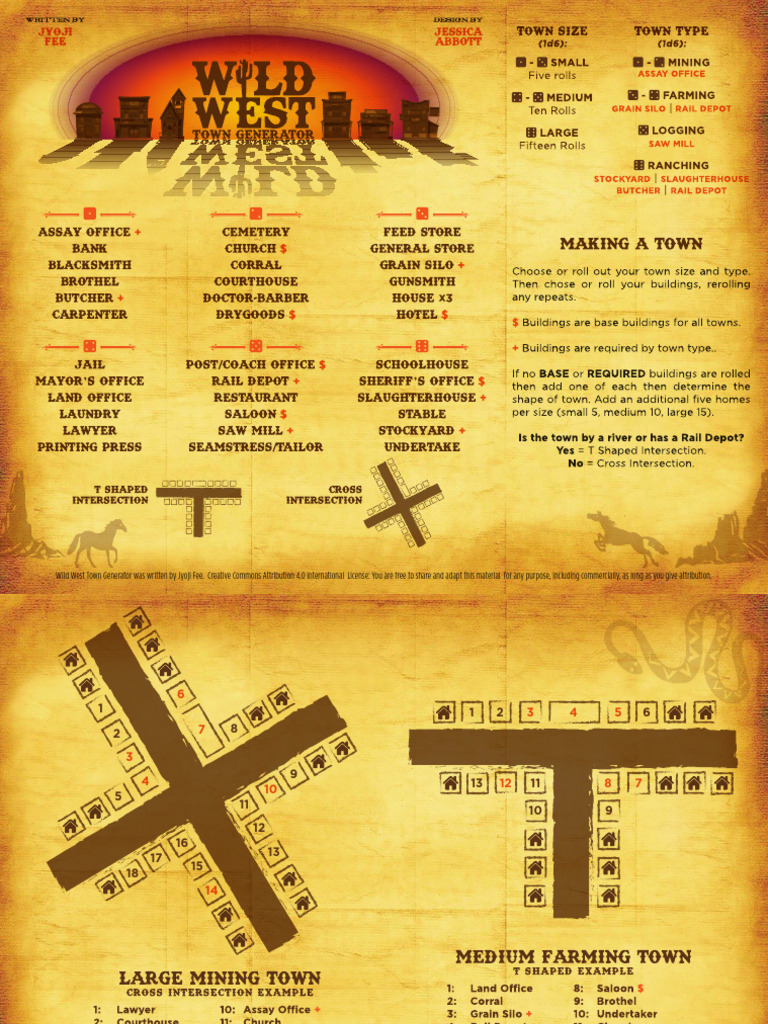
When using a generator, look for names that create a mental picture. Avoid names that are too soft or modern. The Wild West was a place of sharp edges, extreme weather, and hard choices—your town names should reflect that reality.
FAQ: Frequently Asked Questions
1. How did real Wild West towns get registered?
In the 19th century, a town's name became official when it established a U.S. Post Office. Often, the Post Office Department would reject names that were too similar to existing towns in the state, forcing settlers to quickly come up with unique, sometimes bizarre alternatives.
2. Can I use these generated names for commercial projects?
Yes! Names generated by a wild west town name generator are generally free to use for novels, video games, tabletop RPGs, and other creative projects. However, it is always a good idea to do a quick trademark search if you plan to publish commercially.
3. What is the difference between a "boomtown" and a "ghost town"?
A boomtown is a settlement that experiences rapid population and economic growth due to a sudden resource discovery (like gold or silver). A ghost town is a formerly bustling town—often a boomtown—that has been completely abandoned after the resource was depleted or the railroad bypassed it.
4. How can I make a generated name sound more unique?
Try adding a historical prefix or suffix like "Fort," "Camp," "Siding," "Junction," "Plaza," or "Depot." For example, instead of just "Coyote," you could use "Fort Coyote" or "Coyote Siding."
5. Why are so many western towns named after water features?
In the arid environments of the American West, access to clean water was a matter of life and death. Towns naturally grew around springs, creeks, rivers, and crossings, making water-related terms incredibly common in historical naming.
Conclusion: Claim Your Frontier Territory Today
Building a compelling Western world starts with the land itself. A single authentic, evocative town name can spark a dozen story ideas, define a character's origin, or set the stage for an unforgettable showdown.
By understanding the historical pragmatism behind 19th-century naming conventions and leveraging the power of a wild west town name generator, you can easily bypass creative blocks and populate your maps with grit, rumor, and a little hard luck.
Don't let your stories get lost in a desert of clichés. Fire up a generator, find your perfect frontier name, and start building your legend today!
References
- Fantasy Name Generators — Wild West town names, 2026
- Wild West Town Name Generator: Frontier Place Ideas — Historical naming conventions and settlement categories, 2026
- What's Your Town's Name? — Authenticity in frontier storytelling, 2026
- NameGenHub — AI-powered Old West name generation trends, 2026
- Western Town Name Generator — 100+ Wild West Town Names, 2026