
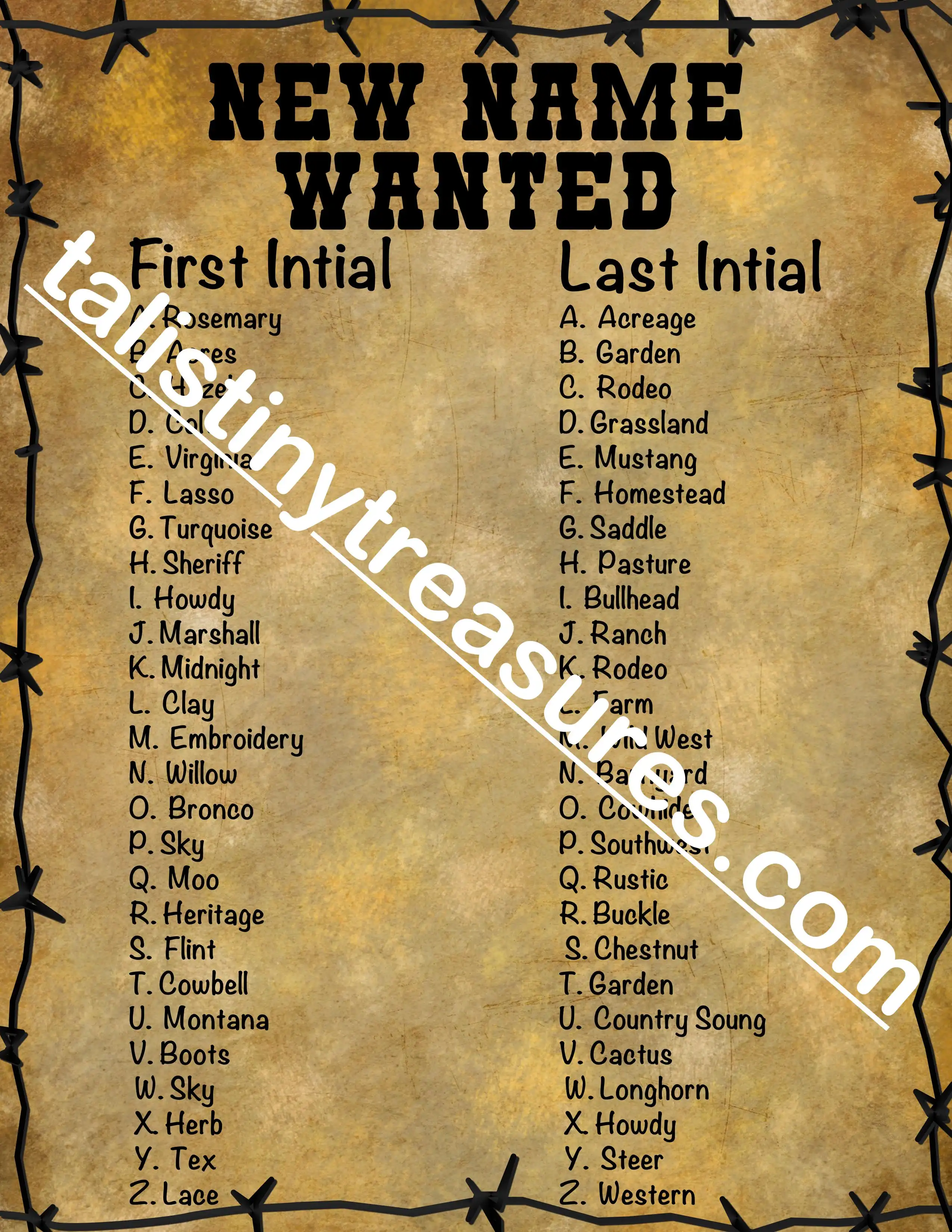
Are you looking for the perfect moniker for a gritty outlaw, a rugged cowboy, or a homesteading pioneer? Finding the right name isn't just about picking words out of a hat; it's about capturing the dusty, sun-baked essence of the historic frontier. Using Western Name Generator Ideas can spark incredible inspiration, but a raw generator output often lacks the subtle texture that makes a name feel lived-in and real. To truly captivate your audience, you must learn how to filter, refine, and audit these generated names to ensure they carry the weight of history.
During the 19th century, the American frontier history was shaped by a melting pot of cultures, languages, and backgrounds. Names reflected this diversity, blending traditional European origins with rugged, practical nicknames born out of survival. In this guide, we will walk you through a comprehensive naming audit and scorecard system. This framework will help you transform generic generator results into authentic, memorable Western names that sound like they walked straight out of a saloon.
Prerequisites for Designing a High-Quality Western Name
Before you start running names through a generator or drafting your character list, you need to establish a solid foundation. An authentic name does not exist in a vacuum; it is deeply tied to the specific time, place, and social context of your setting. Skipping this initial step often results in names that feel modern, mismatched, or cartoonish.
- Identify the exact historical era: A name common during the 1840s California Gold Rush will sound very different from a name popular during the 1890s rail boom.
- Determine the character's geographic origin: Consider whether your character migrated from the Appalachian mountains, emigrated from a European country, or grew up in a southern ranching community.
- Establish social status and occupation: A wealthy Bostonian banker moving west will have a far more formal name than a self-taught trail boss.
- Choose your project's tone: Decide if you are aiming for strict historical realism, a stylized cinematic Western, or a fantastical "weird west" vibe.
- Consult historical records: Look at 19th-century census data, military registries, and local town directories to understand the naming conventions of the period.
The Name Authenticity Audit Scope: What Makes a Name Sound Real?
An authenticity audit is a systematic way to evaluate a generated name against historical and linguistic standards. Instead of relying on a vague "gut feeling," this process uses specific criteria to measure how well a name fits your creative world. By analyzing the structural elements of a name, you can identify exactly why a generated name works or where it falls short.
- Phonetic texture: The physical sound of the name when spoken aloud, focusing on the balance of harsh consonants and soft vowels.
- Historical plausibility: Verification that both the first and last names were in active use during the target historical period.
- Socio-economic alignment: Ensuring the name matches the character's background, education level, and life experiences.
- Cultural roots: Reflecting the diverse immigrant populations—such as Irish, German, Mexican, and Scandinavian—that shaped the frontier.
- Memorability and flow: Balancing historical accuracy with a distinct rhythm that makes the name stand out to a reader or player.
Western Name Scoring Rubric
To keep your evaluation objective, use this standardized scoring rubric. Each generated name should be rated from 1 to 5 across key criteria. This scoring system helps you filter out low-quality generator outputs and highlight names that only need a minor tweak to become perfect.
| Criterion | Score 1–2 (Weak) | Score 3–4 (Moderate) | Score 5 (Excellent) |
|---|---|---|---|
| Phonetic Flow | Sounds modern, clunky, or difficult to pronounce in dialogue. | Pronounceable but lacks a distinct rhythmic cadence. | Rolls off the tongue with natural, gritty frontier rhythm. |
| Historical Fit | Contains modern spellings or highly anachronistic terms. | Plausible name, but feels generic or overly common. | Perfectly matches the naming conventions of the specific decade. |
| Nickname Synergy | No room for a natural nickname, or the nickname feels forced. | Has a basic nickname, but it lacks personality or story value. | The nickname flows seamlessly and hints at a deeper backstory. |
| Cultural Realism | Ignores the character's heritage or uses inaccurate stereotypes. | Vaguely matches the heritage but lacks regional specificity. | Beautifully reflects the rich, diverse immigrant history of the West. |
Walkthrough of Criterion 1: Phonetic Grit and Flow
Sounding Out the Frontier
The sounds of the Old West were harsh, metallic, and earthy. When evaluating a name's phonetics, look for hard consonants that evoke the clink of spurs, the crack of a whip, or the thud of a horse's hoof. Names with too many soft, flowing vowels can sometimes sound too modern or fantasy-oriented for a rugged Western setting.
- Hard plosives like K, T, and D add instant grit (e.g., "Cade", "Garrett", "Beckett").
- Sibilant sounds like S and Sh can sound slick, dangerous, or mysterious when paired with a sharp surname (e.g., "Silas", "Shane").
- Avoid overly rhythmic, poetic cadences that sound like they belong in a Victorian romance novel rather than a dusty trail.
- Test the transition between the first and last name to ensure there are no awkward tongue-twisters.
Walkthrough of Criterion 2: Historical and Regional Anchoring
Grounding Names in Time and Space
A common mistake is using names that feel universally "old" but are historically inaccurate for the 19th-century American West. Names evolved rapidly as waves of immigrants arrived and settlers moved across the continent. To achieve true authenticity, you must align your name choices with these historical movements. For inspiration, you can explore western names inspired by cowboys, outlaws, and frontier legends to see how real historical figures were named.
- Immigrant communities often kept traditional naming patterns while gradually adapting them to English spelling.
- Biblical first names were incredibly common due to the deeply religious nature of 19th-century families (e.g., "Enoch", "Jedidiah", "Thaddeus").
- Surnames often reflected geographic landmarks, ancestral trades, or localized regional origins.
- Names in the Southwest carried strong Spanish and Mexican influences, reflecting the deep roots of the vaquero culture.
Walkthrough of Criterion 3: Avoiding Anachronisms and Modern Slang
Spotting the Modern Imposters
Many online name generators pull from modern databases, leading to names that sound vaguely rustic but are actually contemporary inventions. Names like "Jaxson," "Ryder," or "Maverick" might sound cool in a modern country music video, but they will instantly break immersion in a historical Western story. Learning to spot and eliminate these anachronisms is a vital part of your naming audit.
- Watch out for modern spelling variations, especially those that substitute 'y' or 'i' in unusual places.
- Avoid names that only gained popularity in the late 20th or early 21st centuries.
- Be skeptical of names that sound like modern corporate brands or contemporary outdoor gear.
- Use historical databases to verify that a name was actually recorded in census data prior to 1900.
Walkthrough of Criterion 4: Character Role and Nickname Alignment
Integrating Nicknames and Titles
In the wild expanse of the frontier, formal names were often cast aside in favor of colorful, descriptive nicknames. These monikers were earned through deeds, physical traits, occupations, or even embarrassing mistakes. Integrating Western nicknames into your character design adds an immediate layer of depth and folklore to your world.
- Occupational nicknames were common for professionals, such as "Doc" for a medic or "Deacon" for a pious man.
- Physical traits often inspired ironic or direct nicknames, like "Shorty," "Lefty," or "Red."
- Place-of-origin nicknames helped identify strangers, such as "Texas Jack" or "Denver Pete."
- Ensure the nickname fits naturally when spoken alongside the character's real first or last name.
Walkthrough of Criterion 5: Genre-Appropriate Imagery and Symbols
Painting a Picture with Names
The Western genre is heavily defined by its stark, beautiful, and unforgiving landscape. Names that evoke natural elements, wildlife, or frontier tools can help reinforce the atmosphere of your setting. However, this must be done with subtlety; otherwise, the name risks becoming a caricature rather than a believable identity.
- Nature-inspired surnames like "Clay," "Flint," "Ridge," or "Gale" ground the character in the environment.
- Animal associations can subtly hint at a character's personality traits without being too obvious.
- Industrial or survival tools can inspire rugged names, such as "Colt," "Anvil," or "Miller."
- Avoid combining too many symbolic elements into a single name, which can make it feel overdesigned.
Step-by-Step Guide to Customizing Generator Outputs
Raw generator results are rarely perfect on the first try. To get the most out of your Western Name Generator Ideas, you should treat the initial outputs as raw clay that needs to be shaped. Follow this step-by-step process to customize and polish your generated names into authentic gems.
- Generate a bulk list: Run your chosen generator until you have a list of at least 20 to 30 raw names.
- Deconstruct the pairs: Separate the first names from the last names to create two distinct pools of words.
- Mix and match: Pair different first and last names together, testing how they sound when spoken in sequence.
- Adjust the spelling: Modify modern spellings to match historical 19th-century conventions (e.g., changing "Caleb" to "Kaleb" if a specific regional flavor is needed).
- Apply the "Saloon Test": Imagine a bartender shouting the name across a crowded, noisy room to see if it carries well.
Sample Scored Audit of Five Western Name Generator Outputs
To demonstrate the auditing process in action, we have run five typical Western generator outputs through our scoring rubric. This practical example shows how to identify weak names, recognize strong names, and make necessary adjustments for maximum authenticity.
| Generated Name | Phonetic Flow (1-5) | Historical Fit (1-5) | Total Score | Verdict & Action |
|---|---|---|---|---|
| Jaxson Ryder | 2 | 1 | 3/10 | Rejected: Far too modern. Replace with "Jackson" or "Rider". |
| Silas Vance | 5 | 5 | 10/10 | Excellent: Perfect blend of grit, flow, and historical accuracy. |
| Cody Maverick | 3 | 2 | 5/10 | Weak: Feels like a modern country singer. Needs a more grounded surname. |
| Abner Higgins | 4 | 5 | 9/10 | Strong: Carries great historical weight and a classic rustic feel. |
| Wyatt Blackwood | 4 | 4 | 8/10 | Strong: Great for an outlaw, though "Wyatt" is slightly common. |
Remediation Priority Workflow: Fixing Weak Names
If your favorite generated name scored poorly on the audit, you do not have to throw it away entirely. Most names can be saved with a few targeted adjustments. Use this structured remediation workflow to systematically address the weakest elements of a name, prioritizing the most critical issues first.
- P0 (Critical) - Fix Spelling Anachronisms: Immediately correct any modern phonetic spellings back to their traditional 19th-century roots.
- P1 (High) - Swap Generic Surnames: Replace overused last names (like "Smith" or "Jones") with more descriptive, regionally specific surnames.
- P2 (Medium) - Adjust Rhythmic Cadence: If the name is a tongue-twister, swap out syllables to improve the spoken flow.
- P3 (Low) - Integrate a Nickname: Add a colorful moniker to break up a name that feels slightly too formal or plain.
Common Pitfalls to Dodge When Generating Western Names
"A name on the frontier was more than just a label; it was a reputation, a warning, or a clean slate for someone looking to escape their past."
When creating characters for creative writing or historical roleplay, it is easy to fall into creative traps. Over-stylizing your names can make your world feel like a cartoon rather than a living, breathing place. By keeping these common pitfalls in mind, you can maintain a high standard of realism and depth throughout your project.
- The "John Wayne" Effect: Making every male character sound like a legendary, larger-than-life movie star.
- Ignoring demographic diversity: Forgetting that the historical West was home to diverse Native American, Chinese, Black, and European communities.
- Overusing "cool" words: Relying too heavily on dramatic surnames like "Death," "Graves," "Gun," or "Shadow."
- Skipping foundational research: Failing to read about how to choose the perfect western name before finalizing your character list.
Establishing a Periodic Re-Audit Cadence for Creative Projects
Names that sound great during the initial brainstorming phase can sometimes lose their appeal as your project develops. As characters grow, their names need to grow with them. Setting up a regular review schedule ensures your names remain fitting and effective throughout the entire creative process.
- Initial Concept Phase: Audit your generated names immediately after creation to filter out the weakest options.
- First Draft Review: Re-evaluate character names after writing a few scenes to see if they match the character's actual voice and behavior.
- Dialogue Read-Aloud: Read all scenes involving the character's name aloud to test phonetic flow in natural speech.
- External Feedback Session: Share your name list with peer readers or historical enthusiasts to catch any lingering errors.
A Final Checklist for Your Authentic Western Moniker
Before you officially stamp a name onto your character sheet, manuscript, or game design document, run it through this final checklist. If your name successfully ticks all of these boxes, you can be confident that it will resonate with your audience and stand the test of time.
- Does the name avoid modern spelling trends and contemporary slang?
- Is the first name historically documented in census records from your target decade?
- Does the surname reflect the character's specific cultural or regional heritage?
- Is the name easy to pronounce while still maintaining a rugged, gritty texture?
- If applicable, does the nickname feel earned and integrated naturally into the full name?